
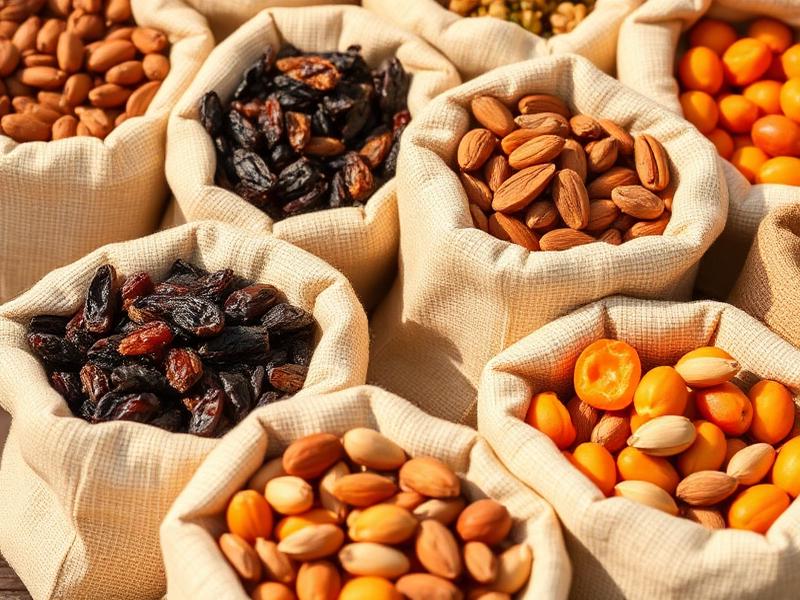
Raisins from Kandahar, pine nuts from the eastern forests, almonds and apricots from the northern valleys — what global buyers should know about seasons, grading and paperwork before their first Afghan purchase order.
Afghanistan has grown and dried fruit for centuries, long before cold chains and dehydrators existed. Hot, dry summers, cold winters and high-altitude orchards give Afghan produce a natural sweetness and shelf life that industrial drying struggles to reproduce. For buyers in the Gulf, Europe and South Asia, that combination of flavour and tradition is exactly the point.
At Wakman Group, dried fruits and nuts are one of our core export programmes. This guide summarises what we walk every new buyer through before a first container or air shipment leaves Kabul.
The products buyers ask for most
- Raisins — sun-dried and shade-dried green and red raisins from Kandahar, Parwan and Kabul province vineyards.
- Pine nuts (jalgoza) — wild-harvested in the eastern forests of Kunar, Nuristan and Paktia; prized for size and oil content.
- Almonds — hard-shell and soft-shell varieties from the northern and central valleys.
- Pistachios — smaller in volume than Iran or the USA, but with a distinctive flavour profile.
- Dried apricots, mulberries and figs — traditional sun-dried lines with strong demand in ethnic and health-food markets.
Understand the harvest calendar
Afghan dried fruit is seasonal, and buying well means buying close to the harvest. Grapes are picked from late summer and dried through early autumn, so new-crop raisins typically reach export warehouses between September and November. Pine nuts are harvested in autumn and traded through winter. Almonds and apricots move earlier in the summer. Buyers who contract around the harvest secure the best selection; those who wait trade from storage stocks.
Grading, cleaning and packing
The gap between a village lot and an export-grade carton is processing: hand-sorting, sieving, washing or laser-cleaning where required, moisture control and food-grade packaging. We prepare product to the buyer's specification — bulk cartons for repackers, vacuum or nitrogen-flushed packs for retail programmes — and agree the grade in writing before production starts.
Documents and logistics
A standard Afghan dried-fruit shipment travels with a commercial invoice, packing list, certificate of origin and a phytosanitary certificate; food-safety documentation is added where the destination requires it. Shipments move by air from Kabul for fast or high-value orders, and overland through Hairatan, Torghundi and Islam Qala for sea-freight connections. We quote the corridor that fits the product's shelf life and the buyer's landed-cost target.
Start the conversation
Whether you are a wholesaler testing a first pallet or a retailer planning a private-label line, our export desk in Kabul will walk you through crops, grades and prices. Send us your target specification and we respond with samples, documentation and a corridor plan.